

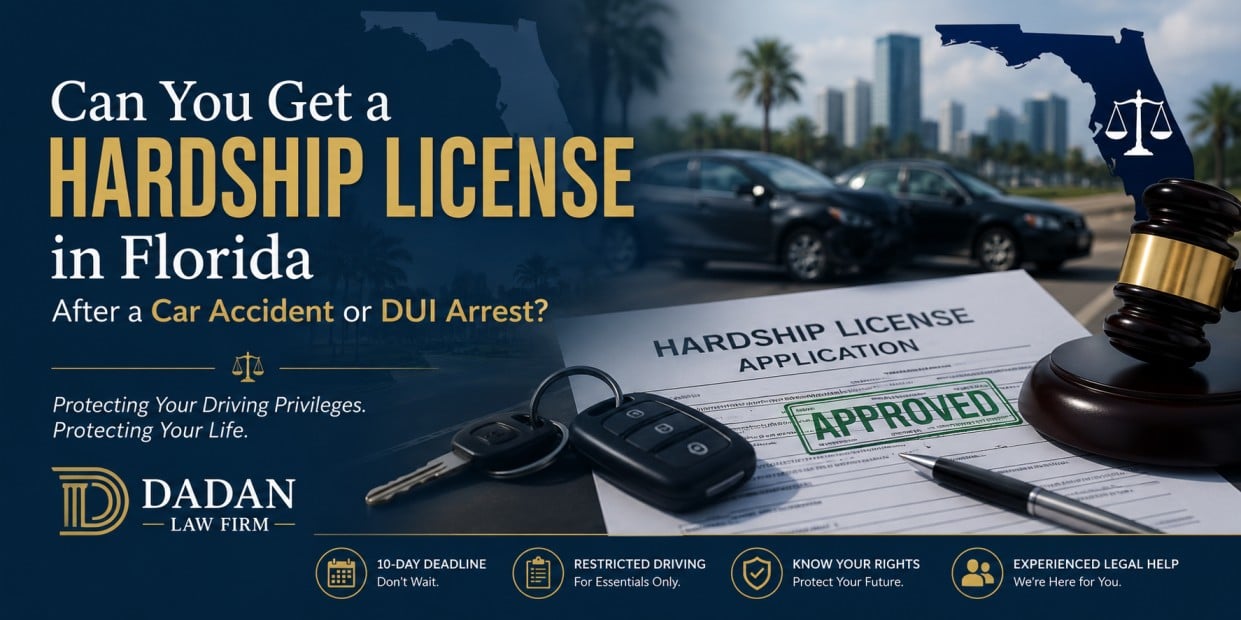
Losing your license after a DUI arrest can feel like everything stops at once — work, school, picking up your kids, getting groceries. The good news is that Florida law often gives you a way to keep driving for the essentials.
That option is called a hardship license florida drivers can apply for after a suspension. Below, we break down how it works, who qualifies, and the mistakes that get applications rejected.
What Is a Hardship License in Florida?
A hardship license is a restricted license issued by the Florida Department of Highway Safety and Motor Vehicles (FLHSMV). It lets you drive under specific conditions while your regular license is suspended.
It is not your full driving privilege back. It’s a limited permit designed to keep your life running while you work through the suspension period.
Florida offers two types:
- Business Purposes Only (BPO): driving to work, school, church, medical appointments, and necessary errands.
- Employment Purposes Only (EPO): the stricter option driving only to and from your job, or for tasks that are part of your job.
The 10-Day Clock You Can’t Ignore
Here is the detail that catches most people off guard. After a DUI arrest, you have only 10 days to act before your license is administratively suspended.
The citation you receive usually acts as a temporary 10-day permit. During that short window, you can either challenge the suspension at a formal review hearing or apply for a hardship license.
Miss those 10 days, and you lose your easiest path back behind the wheel. This is exactly why acting fast and getting legal help early matters so much.
Two Suspensions, One License
Here’s something many drivers don’t realize: a DUI arrest can trigger two separate suspensions that run on different tracks.
The first is the administrative suspension, handled by the FLHSMV. It happens automatically based on a high breath-test reading or a refusal, completely apart from the courtroom. This is the suspension tied to that urgent 10-day window.
The second is the court-ordered suspension, which only happens if you’re actually convicted of DUI. It carries its own penalties and its own timeline.
Because these two processes move independently, you can win one and still face the other. Handling both correctly is the only way to fully protect your driving privilege, and it’s a big reason these cases are tough to manage alone.
Can I Drive After a DUI-Related Accident?
In many cases, yes, at least temporarily. If your physical license wasn’t taken at the scene, that 10-day citation often lets you keep driving for a short period.
But timing and circumstances vary. If there was an injury, a refusal to take a breath test, or a prior offense, your situation quickly becomes more complicated.
Knowing what to do after an accident in those first few days can protect both your license and any related claim. The safest move is to confirm your status before you assume you’re cleared to drive.
How to Apply for a Hardship License
The process is paperwork-heavy and unforgiving of mistakes. In general, a first-time applicant must:
- Enroll in DUI school. You’ll need to register for a Florida-approved DUI education program (Level I or Level II) and bring proof of enrollment.
- Request a hearing. Apply for a hearing with the DHSMV Bureau of Administrative Reviews.
- Attend the hearing. A hearing officer reviews your case, your record, and your reasons for needing the license.
- Pay the fees. Expect an application fee plus reinstatement and related costs.
If the officer approves your request, you’ll be issued a hardship license with strict limits on where and when you can drive.
Those limits are real, and violating them carries consequences. Driving outside the approved purposes — say, a road trip when you hold an Employment Purposes Only license can get the hardship license revoked entirely. Treat the restrictions as firm rules, not suggestions.
Understanding the Florida DUI Suspension Periods
How long you’re suspended depends on your history. A first conviction typically results in a suspension of 6 months to 1 year, with a possible hardship reinstatement after completing DUI school.
A florida DUI suspension for a second conviction within five years can mean a five-year revocation, and a third within ten years can mean ten years.
For second and subsequent offenses, you generally must enroll in the Special Supervision Services Program and may face a mandatory ignition interlock device before any hardship license is even possible.
Why Would a Hardship License Be Denied in Florida?
Plenty of applications fail, and usually for avoidable reasons. A denied hardship license florida outcome often comes down to:
- Missing the critical 10-day window.
- Failing to enroll in DUI school before applying.
- A history of refusing breath or blood tests.
- Multiple DUI convictions that bar eligibility.
- Driving while suspended during the waiting period.
A denial doesn’t always mean the end of the road, but it does make the path harder. This is one of the strongest reasons to have an attorney handle your application from the start.
When to Call a Lawyer
A hardship license hearing isn’t just a formality; it’s a chance to argue your case, and how you present it matters. An experienced attorney knows what hearing officers look for and how to keep small errors from sinking your request.
If you’re searching for the “best dui lawyer in fort pierce“, look for someone who handles both the criminal side and the license side of a DUI. The two move on separate tracks, and you need both to be protected.
These cases also overlap with other parts of your life. Our family law fort pierce fl team understands how a suspended license can affect custody, work, and your family’s stability so your defense accounts for the whole picture.
Frequently Asked Questions
- What is a hardship license in Florida?
It’s a restricted license that lets you drive for limited purposes — like work or school — while your regular license is suspended. - Why would a hardship license be denied in Florida?
Common reasons include missing the 10-day deadline, not enrolling in DUI school, prior test refusals, or multiple DUI convictions. - Can I drive after a DUI-related accident?
Often yes, for about 10 days, if your license wasn’t physically taken. After that, you need a hardship license or wait out the suspension. - How long does it take to get a hardship license?
It varies. After enrolling in DUI school and requesting a hearing, approval can take a few weeks, but acting within the first 10 days keeps the timeline on track.
Don’t Wait. Your 10 Days Are Already Counting Down
A DUI arrest doesn’t have to take away your ability to work and care for your family. But in Florida, the clock starts the moment you’re arrested.
Call Dadan Law Firm in Fort Pierce today for a confidential consultation. The sooner we review your case, the more options we have to protect your license and your future.