

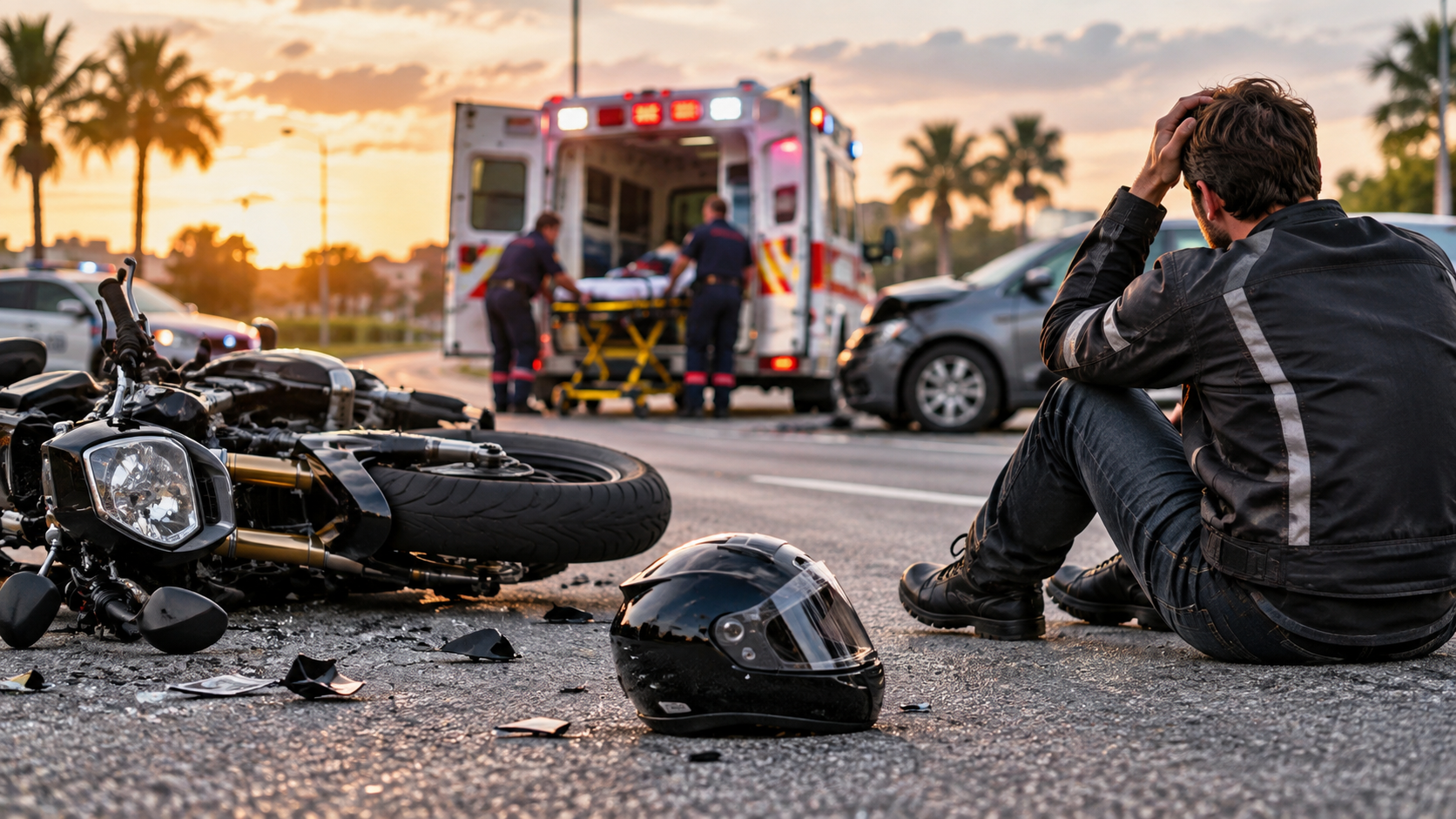
Motorcycle riders face a double disadvantage after a crash in Florida. Injuries are almost always more severe than in an enclosed vehicle, and the insurance rules that protect car drivers don’t apply the same way to riders.
Knowing what to do after a motorcycle accident protects both your health and your financial recovery. This guide walks through the steps in order, explains the insurance rules unique to riders, and describes when Port St. Lucie riders should involve a motorcycle accident lawyer.
Step 1: Get to Safety and Call 911
If you are able, move yourself and your motorcycle out of the travel lanes. On US-1, Crosstown Parkway, and I-95, secondary collisions are a serious risk in the minutes after a crash.
Call 911 even if you believe your injuries are minor. Florida law requires you to report a crash involving injury, death, or significant property damage, and the resulting police report becomes important evidence. The force of a motorcycle collision can also cause internal injuries and head trauma that are not immediately apparent.
Step 2: Accept Medical Care and Follow Through on Treatment
Allow paramedics to evaluate you at the scene, and go to the hospital if they recommend it. Adrenaline masks pain, and injuries such as internal bleeding, fractures, and traumatic brain injuries may not produce symptoms for hours or days.
Attend every follow-up appointment and follow your treatment plan. Gaps in care harm your recovery, and insurance companies routinely use missed appointments to argue that injuries were minor or unrelated to the crash.
Step 3: Document the Scene and Preserve Your Gear
If you are physically able, photograph the vehicles, your motorcycle, skid marks, debris, road conditions, and any visible injuries. Collect the other driver’s name, license, insurance, and contact information, along with names and phone numbers of witnesses.
Then preserve your gear. Do not repair the bike, and do not throw away your helmet, jacket, or gloves. The condition of your equipment helps reconstruction experts establish how the crash happened and how severe the impact was.
Step 4: Understand Florida’s Insurance Rules for Riders
This is where motorcycle cases diverge sharply from car crashes, and where many riders get an unpleasant surprise.
Florida’s no-fault law does not apply to motorcycles. The Personal Injury Protection (PIP) coverage that pays initial medical bills for car occupants excludes motorcycles entirely, because the statute defines a motor vehicle as having four or more wheels. Riders do not pay PIP premiums and cannot collect PIP benefits.
That means your medical bills after a crash are generally paid through a fault-based claim against the at-fault driver, your own health insurance, medical payments coverage on your motorcycle policy, or your uninsured/underinsured motorist (UM/UIM) coverage. Because bodily injury coverage is optional for Florida drivers, UM/UIM coverage is often the most important protection a rider can carry.
Step 5: Know How Bias and the Helmet Question Affect Your Claim
Insurance adjusters often approach motorcycle claims with a built-in assumption that the rider was speeding or riding recklessly. Overcoming that bias takes evidence, not argument.
Florida’s helmet law adds another layer. Riders 21 and older may legally ride without a helmet if they carry at least $10,000 in medical benefits coverage. Riding without a helmet is not a bar to recovery, but insurers frequently argue that it worsened head or facial injuries to reduce what they pay.
Under Florida’s modified comparative negligence system, your compensation is reduced by your percentage of fault, and recovery is barred entirely if that percentage exceeds 50 percent. Every argument the insurer makes about your riding or your gear targets that number.
Step 6: Be Careful With the Insurance Company
Do not provide a recorded statement, speculate about fault, or discuss the extent of your injuries with the at-fault driver’s insurer before obtaining legal advice. Early settlement offers are typically made before the full cost of treatment, lost income, and future care is known.
If an adjuster contacts you, a simple response is enough: all communications can go through your attorney. Once a claim is settled and a release is signed, you generally cannot seek additional compensation for the same crash.
Step 7: Document Every Loss
The value of a personal injury claim depends heavily on documentation. Keep organized records of medical bills, prescription receipts, therapy costs, travel expenses for treatment, repair estimates for your motorcycle and gear, and proof of lost wages.
A daily journal describing pain levels, physical limitations, and activities you can no longer perform helps establish non-economic damages such as pain and suffering. Serious riding injuries often involve future surgeries and long-term effects, and those future losses belong in the claim as well.
Step 8: Know Your Deadline and Get Legal Advice Early
For most crashes occurring on or after March 24, 2023, Florida law generally allows two years from the date of the accident to file a negligence lawsuit. Missing that deadline can permanently bar your claim.
A motorcycle accident claim Florida riders pursue often turns on evidence that fades quickly: skid marks, surveillance footage, vehicle damage, and witness memories. An experienced motorcycle accident lawyer can preserve that evidence, identify every available insurance policy, counter rider bias with facts, and handle the insurers while you focus on recovery.
The same insurer tactics appear across auto accident cases of every kind, but the coverage gaps facing riders make early legal guidance especially valuable in motorcycle claims.
Frequently Asked Questions
What should I do immediately after a motorcycle accident in Florida?
Move to safety, call 911, and accept medical evaluation at the scene. If you are able, photograph the scene, gather the other driver’s information and witness contacts, and preserve your helmet and gear. Avoid giving a recorded statement to the other driver’s insurer before speaking with an attorney.
Who is usually at fault in a motorcycle accident?
Many motorcycle crashes are caused by drivers who fail to see or yield to riders, particularly in left-turn and lane-change collisions. Fault is determined by evidence, and Florida’s comparative negligence rules allow it to be divided between the parties, which is why thorough documentation matters.
Does Florida’s no-fault law apply to motorcycle accidents?
No. Florida’s PIP statute excludes motorcycles from its definition of a motor vehicle, so riders cannot collect no-fault benefits. Compensation generally comes from a fault-based claim against the at-fault driver, your own UM/UIM coverage, health insurance, or medical payments coverage on your motorcycle policy.
How long do I have to file a motorcycle accident claim in Florida?
For most crashes occurring on or after March 24, 2023, Florida law generally provides two years from the date of the accident to file a negligence lawsuit. Important evidence can disappear quickly, so it is wise to act fast.
Do I need a lawyer if the insurance company already offered a settlement?
Have any offer reviewed before you accept it. Early offers are usually made before the full extent of your injuries and future care needs are known, and signing a release ends your right to seek more compensation for the same accident.
Speak With Us Before You Speak With Their Insurer
After a motorcycle crash, the insurance company begins protecting its interests immediately. You should have someone protecting yours just as quickly.
If you or a loved one has been injured in a motorcycle accident in Port St. Lucie or anywhere on the Treasure Coast, contact Dadan Law Firm for a free consultation. We will investigate the crash, preserve the evidence, deal with the insurers, and pursue the full compensation your recovery requires. You pay no attorney’s fees unless we recover for you.