

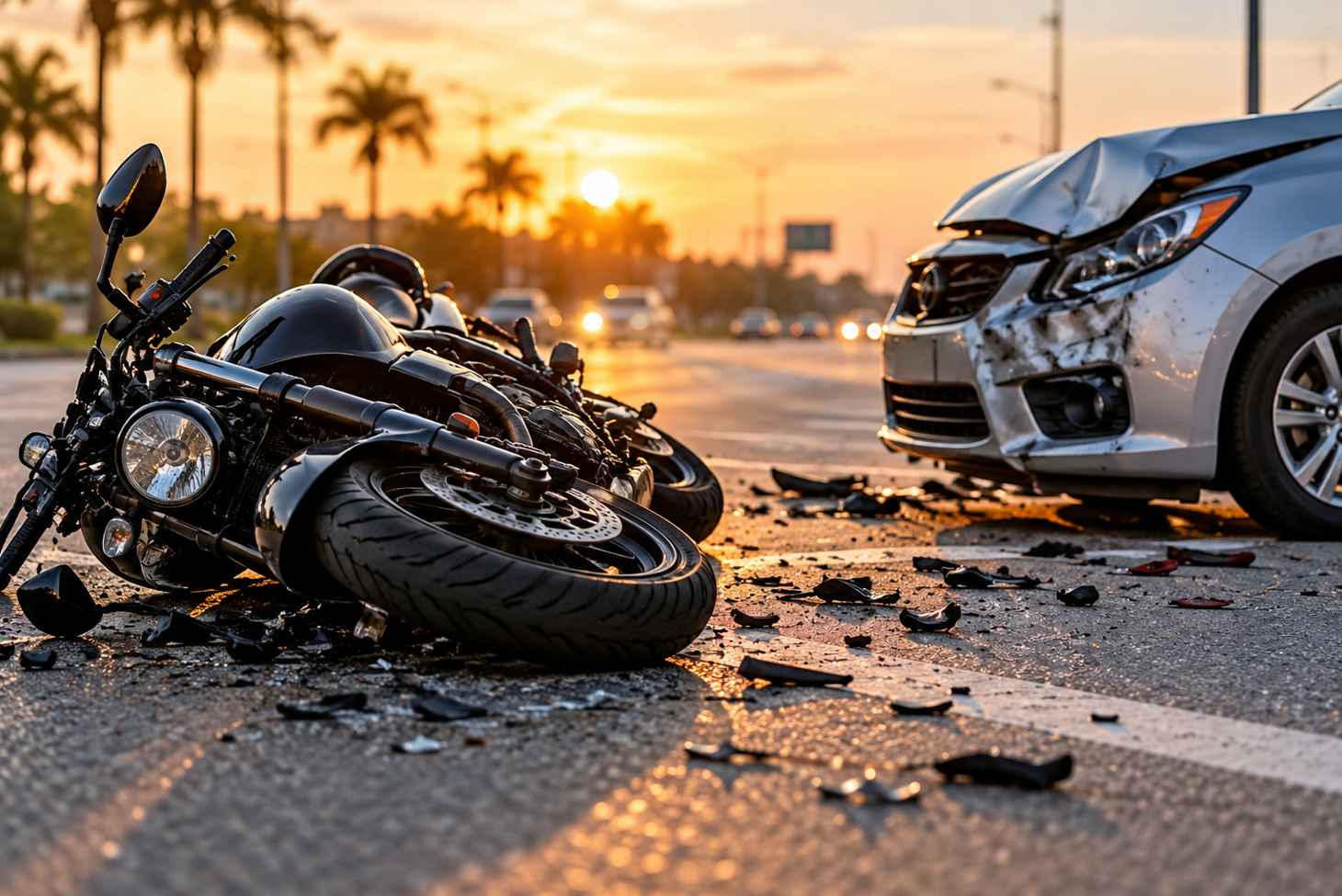
Florida consistently ranks among the deadliest states in the country for motorcycle riders. Year-round riding weather, heavy tourist traffic, and congested corridors like I-95 and US-1 combine to put riders at risk every day.
Most of these crashes are not caused by the rider. Drivers cause them by failing to see, yield to, or respect motorcycles. Understanding the common causes and how fault is proven afterward is the foundation of every successful claim a Florida motorcycle accident lawyer will build for riders.
The Most Common Causes of Motorcycle Accidents in Florida
Left-Turn Collisions
The single most common serious motorcycle crash happens when a driver turns left across a rider’s path at an intersection. Drivers often misjudge an oncoming motorcycle’s speed or fail to see it.
In most cases, the turning driver had a duty to yield, making these crashes strong liability cases when evidence is preserved.
Unsafe Lane Changes and Blind Spots
A motorcycle’s narrow profile disappears easily into a car’s blind spot. Drivers who change lanes without a full head check sideswipe riders or force them off the road.
Vehicle damage patterns and witness accounts usually establish which vehicle left its lane, which is why scene documentation matters so much.
Distracted Driving
A driver glancing at a phone for two seconds at highway speed travels essentially blind for the length of a basketball court. Riders pay the price for that inattention far more often than other motorists.
Cell phone records, obtained through the legal process, can turn a disputed crash into a clear liability case.
Speeding and Following Too Closely
Rear-end impacts that bruise a car occupant can be fatal to a rider. Tailgating drivers leave no margin for the quicker braking motorcycles can do.
Impaired Driving
Alcohol and drug impairment remain leading factors in fatal Florida crashes. Impaired drivers show delayed reactions, poor distance judgment, and drifting that riders cannot predict.
Road Hazards and Poor Conditions
Potholes, gravel, debris, and uneven pavement that a car absorbs can throw a motorcycle down. Where a government entity or contractor failed to maintain or mark a hazard, liability may extend beyond other drivers.
Proving Liability in Motorcycle Accidents
Knowing the cause is not enough. Proving liability in motorcycle accidents means gathering evidence that establishes what happened before the insurance company’s version becomes the official story.
Why the Stakes Are Higher for Riders
Florida’s no-fault system does not cover motorcycles. Riders cannot collect PIP benefits, so compensation generally depends on proving the other party’s fault and recovering through their liability coverage or the rider’s own uninsured motorist coverage.
Florida also applies modified comparative negligence. Your recovery is reduced by your percentage of fault and barred entirely if it exceeds 50 percent. Every piece of evidence either moves that number in your favor or lets the insurer move it against you.
The Evidence That Establishes Fault
Strong motorcycle cases are typically built from several sources working together:
- The police crash report and any citations issued.
- Photographs and video of vehicle positions, damage, skid marks, and road conditions.
- Witness statements collected before memories fade.
- Surveillance or doorbell camera footage from nearby properties.
- Helmet camera or dashcam footage when available.
- Accident reconstruction analysis of speeds, angles, and impact forces.
- Cell phone records showing driver distraction.
- The rider’s preserved gear and the damaged motorcycle itself.
Much of this evidence is time-sensitive. Surveillance systems overwrite footage within days, skid marks fade, and vehicles get repaired. This is where early action by a motorcycle accident lawyer changes outcomes: preservation demands, prompt scene investigation, and expert analysis lock in the facts while they still exist.
Overcoming Rider Bias
Insurance adjusters, and sometimes juries, assume riders are risk-takers. Adjusters use that bias to inflate the rider’s share of fault with arguments about speed, lane position, or visibility.
The answer is evidence, not indignation. Reconstruction data showing lawful speed, a helmet camera capturing the driver’s sudden turn, or phone records proving distraction replace assumptions with facts. Helmet-use arguments work the same way: riding without a helmet is legal for qualifying adults in Florida and doesn’t bar recovery, but insurers raise it to reduce damages, and medical evidence counters that argument.
What Compensation a Strong Liability Case Supports
Once fault is established, damages in a Florida motorcycle claim may include medical expenses and future care, lost income and reduced earning capacity, motorcycle and gear replacement, and pain and suffering. Serious riding injuries often involve long recoveries, so documenting future losses matters as much as past bills.
If liability is disputed or your injuries are significant, speak with a personal injury attorney before giving any statement to the other driver’s insurer. Early statements are a common source of fault arguments later.
Frequently Asked Questions
Is Florida a no-fault state for motorcycle accidents too?
No. Florida’s PIP statute excludes motorcycles from its definition of a motor vehicle, so riders do not receive no-fault benefits. Motorcycle claims proceed as fault-based claims against the responsible party, supplemented by the rider’s own UM/UIM, health, or medical payments coverage.
What compensation can I recover after a motorcycle accident in Florida?
A successful claim may recover medical expenses, future treatment costs, lost wages, diminished earning capacity, property damage, and pain and suffering. The available amount depends on the evidence of fault, the severity of injuries, and the insurance coverage in place.
Do I need a helmet to file a motorcycle accident claim in Florida?
No. Riders 21 and older may legally ride without a helmet if they carry at least $10,000 in medical benefits coverage, and a helmet doesn’t prevent you from filing a claim. Insurers may argue that a missing helmet worsened head injuries to reduce damages, an argument your attorney can counter with medical evidence.
How long do I have to file a motorcycle accident lawsuit in Florida?
For most crashes occurring on or after March 24, 2023, Florida law generally allows two years from the date of the accident to file a negligence lawsuit. Evidence often disappears long before that deadline, so acting early protects both the proof and the claim.
Protect Your Claim Before the Evidence Disappears
The cause of your crash depends on evidence, and evidence favors whoever moves first. The other driver’s insurer started building its version of events the day of the collision.
If you or someone you love has been injured in a motorcycle crash anywhere in Florida, contact Dadan Law Firm for a consultation. We will investigate the cause, preserve the proof, and hold the responsible parties accountable. You pay no attorney’s fees unless we recover compensation for you.